Choosing the right basal medium is fundamental to maintaining healthy, reproducible cell cultures. Different cell types have different nutritional and metabolic requirements, so the formulation used can influence cell growth, viability, and experimental consistency.
Among the widely used cell culture media, RPMI 1640 has become an important choice for applications involving lymphoid cells, immune cells, and several other mammalian cell lines.
This guide explores what RPMI 1640 is, its key components, common formulations, and how researchers can select the appropriate version for their cell culture workflow.
What Is RPMI 1640?
RPMI 1640 is a basal cell culture medium originally developed at the Roswell Park Memorial Institute. It is a nutrient-rich formulation designed to support the growth and maintenance of mammalian cells, particularly cells of hematopoietic and lymphoid origin.
Like other basal media, RPMI 1640 provides cells with essential nutrients, including amino acids, vitamins, inorganic salts, and an energy source.
Depending on the formulation, RPMI 1640 can also contain glucose, L-glutamine, HEPES, and phenol red.
The availability of different formulations allows researchers to select a medium according to the specific requirements of their cell line and experimental design.
What Is RPMI 1640 Used For?
RPMI 1640 is particularly associated with the culture of immune and blood-derived cells.
It is commonly used in research involving:
- Lymphocytes
- T cells and B cells
- Hybridoma cells
- Leukemia and lymphoma cell lines
- Other hematopoietic cells
- Immunological research
- Cancer research
- Antibody-related studies
However, the optimal medium ultimately depends on the specific cell line, culture conditions, and established laboratory protocol.
Key RPMI 1640 Components
Understanding the formulation is important when selecting a cell culture medium.
Glucose
Glucose serves as an important energy source for cultured cells. RPMI 1640 formulations can be supplied with glucose, while some specialised versions may omit other nutritional components depending on the intended application.
L-Glutamine
Glutamine is an important nutrient involved in cellular metabolism and biosynthetic processes. RPMI 1640 is available both with and without glutamine, giving researchers greater flexibility.
Phenol Red
Phenol red is commonly included as a pH indicator. Its colour changes according to the acidity or alkalinity of the culture medium, providing a convenient visual indication of changes in culture conditions.
For applications where phenol red could interfere with an assay or downstream analysis, a phenol-red-free formulation can be selected.
HEPES
HEPES is a biological buffer used in some RPMI 1640 formulations to provide additional pH stability.
This can be useful when cells are exposed to conditions where maintaining stable pH is particularly important.
Sodium Pyruvate
Some RPMI 1640 formulations are available without sodium pyruvate. This allows researchers to add it separately when required by their cell culture protocol or select a formulation that matches their experimental design.
Why Are Different RPMI 1640 Formulations Available?
There is no universal RPMI 1640 formulation suitable for every experiment.
Researchers may need to control individual components because of:
- Cell-specific nutritional requirements
- Experimental design
- Serum supplementation
- Metabolic studies
- Assay compatibility
- Downstream analytical requirements
For example, a researcher may require RPMI 1640 with glucose and glutamine but without phenol red or sodium pyruvate.
Another application may benefit from a formulation containing HEPES and phenol red, while a separate experiment may require RPMI 1640 without glutamine.
Providing multiple formulations makes it easier to align the basal medium with the requirements of a specific cell culture protocol.
Dry Powder vs Liquid RPMI 1640
RPMI 1640 is commonly supplied in both dry powder and liquid formats.
Dry Powder
Powdered medium provides flexibility for laboratories that prepare their own culture media. It can offer practical advantages for storage, transportation, and preparation at scale.
However, preparation requires accurate reconstitution and appropriate supplementation according to the manufacturer’s instructions.
Liquid Medium
Ready-to-use liquid RPMI 1640 simplifies preparation and reduces the handling steps required before cell culture.
It is particularly convenient for laboratories running routine cell culture workflows where consistent media preparation is important.
Choosing the Right RPMI 1640 Formulation
Before selecting a product, check your cell line’s validated culture protocol and determine whether it requires:
- Glucose
- L-glutamine
- Phenol red
- HEPES
- Sodium pyruvate
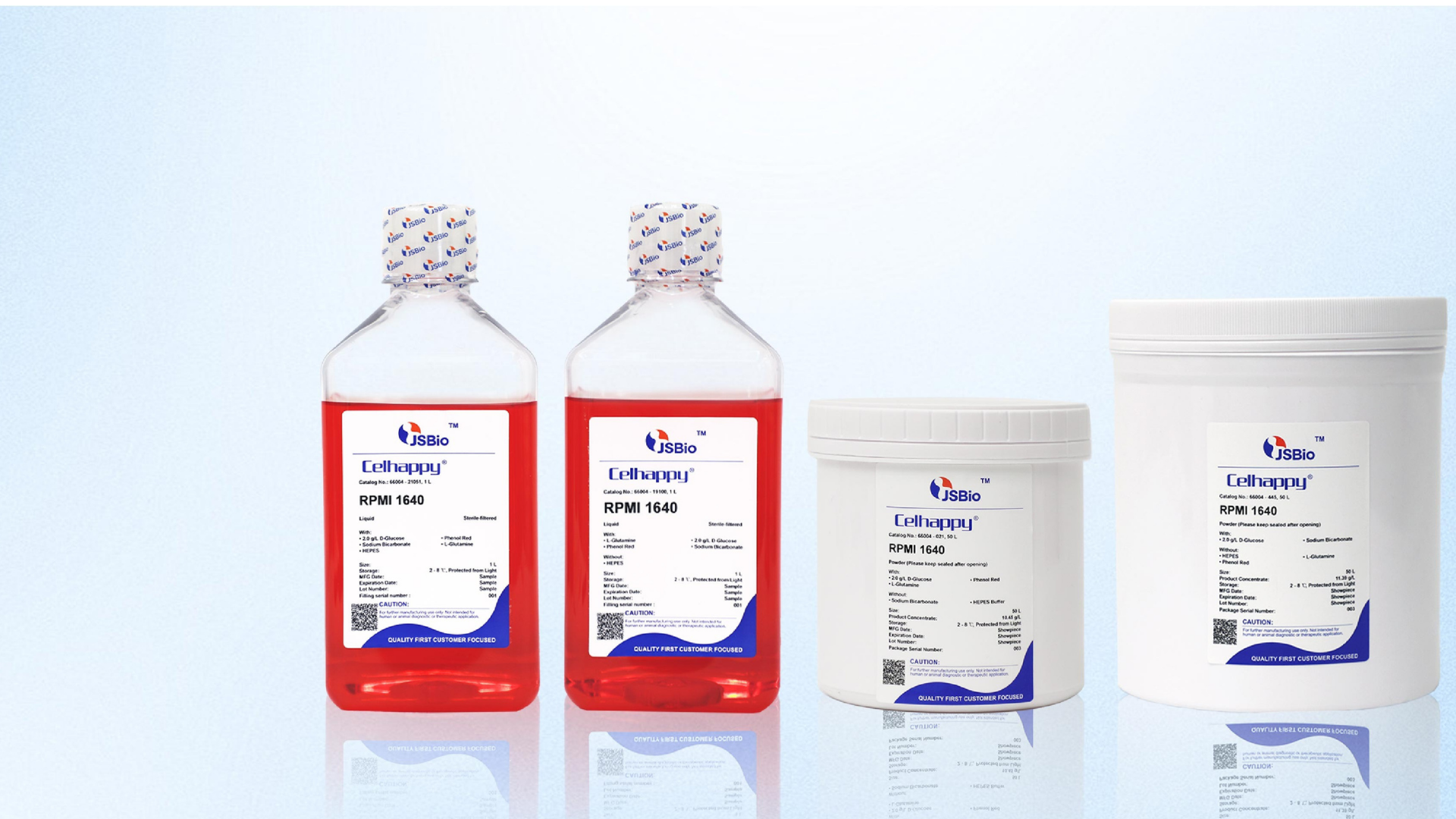
For example, CoPure’s RPMI 1640 range includes formulations with glucose and glutamine, versions without phenol red, formulations containing HEPES and phenol red, and options without glutamine.
This range allows researchers to select a formulation that more closely matches their established cell culture requirements.
RPMI 1640 and Reliable Cell Culture
Consistent media quality is an important part of reproducible cell culture. Variations in nutrient composition, buffering components, or preparation can affect cellular behaviour and ultimately influence experimental results.
Selecting a well-defined RPMI 1640 formulation—and using it consistently throughout an experiment—helps laboratories maintain controlled culture conditions.
Conclusion
RPMI 1640 is a versatile basal medium for mammalian cell culture, particularly well established for lymphoid and hematopoietic cells. Its availability in multiple formulations lets researchers control key components such as glucose, glutamine, phenol red, HEPES, and sodium pyruvate.
Whether supplied as dry powder or ready-to-use liquid medium, selecting the right RPMI 1640 formulation should always be based on the requirements of the specific cell line and validated culture protocol.
CoPure’s range of RPMI 1640 formulations provides laboratories with the flexibility to select the nutrient and indicator composition required for their research and cell culture workflows.
FAQs
- What is RPMI 1640 used for?
RPMI 1640 is commonly used for culturing lymphocytes, hematopoietic cells, hybridomas, and various leukemia and lymphoma cell lines.
- What are the main components of RPMI 1640?
Depending on the formulation, RPMI 1640 can contain glucose, L-glutamine, phenol red, HEPES, and other nutrients including amino acids, vitamins, and inorganic salts.
- Is RPMI 1640 available without phenol red?
Yes. Phenol-red-free RPMI 1640 formulations are available for applications where the indicator may interfere with an experiment or analytical assay.
- What is the difference between dry powder and liquid RPMI 1640?
Dry powder RPMI 1640 requires reconstitution before use, while liquid RPMI 1640 is supplied ready for use according to the manufacturer’s storage and handling instructions.
- Does RPMI 1640 contain glutamine?
Many RPMI 1640 formulations contain glutamine, but glutamine-free versions are also available. The appropriate formulation depends on the requirements of the cell line and experimental protocol.
For Further Enquiry Contact- sales@copure.com