In biopharmaceutical manufacturing, filtration is more than simply removing visible particles. When product sterility, microbial control, and process integrity are critical, selecting the right membrane filtration technology can directly influence the reliability of the downstream process.
For organisations looking for membrane filters in Australia, the choice should consider membrane material, pore size, feed characteristics, particle load, extractables, adsorption, and the ability to perform filter integrity testing.
CoPure offers a comprehensive portfolio of sterilising-grade filters designed for liquid sterile filtration, with scalable solutions spanning research and development through to production.
Why Is Sterile Filtration Important?
Sterile filtration is a critical downstream processing step primarily used for bacteria removal and bioburden control. Unlike clarification filters designed mainly to remove larger particles, sterilising-grade membrane filters are engineered for controlled microbial retention.
For many liquid biopharmaceutical applications, hydrophilic polyethersulfone (PES) membranes with a 0.2/0.22 µm sterilising-grade rating are commonly selected because of their filtration performance and suitability for aqueous pharmaceutical fluids.
However, there is no universal membrane for every application. Complex feeds with high particle loads, sensitive biological molecules, or challenging chemical compositions may require a different membrane material or a staged filtration strategy.
Nominal vs Absolute Membrane Filters
Understanding the difference between nominal- and absolute-rated membranes is essential when selecting membrane filters in Australia.
Nominal-rated membranes, such as polypropylene (PP) and glass fibre (GF), are generally used for clarification and reduction of larger particulate matter. Their filtration performance is not typically verified through the same non-destructive integrity testing approach used for sterilising-grade membranes.
Absolute-rated membranes, including PES, PVDF, PTFE, and nylon, offer more defined retention characteristics and are widely used for bioburden reduction and sterile filtration of liquids and gases.
For critical sterile applications, the ability to perform validated integrity testing is particularly important.
What Makes a Filter Sterilizing-Grade?
A sterilising-grade filter is expected to demonstrate effective microbial retention during a standard bacterial challenge test, commonly involving Brevundimonas diminuta at 1 × 10⁷ CFU/cm², while also establishing a correlation with a practical non-destructive physical integrity test.
Such filters are commonly identified with a nominal pore-size designation of 0.2 or 0.22 µm.
Importantly, pore size alone does not define sterilising performance. Filter construction, membrane characteristics, manufacturing controls, validation, and integrity testing all contribute to determining whether a filter is appropriate for a critical sterile-filtration application.
Recommended Membrane Filters for Complex Fluids
CoPure’s portfolio includes different membrane technologies for challenging fluid streams.
Purcise™ SLES Sterilizing-Grade Filter
Featuring a double-layer hydrophilic PES membrane, the SLES combines a 0.45 µm prefilter with a 0.2 µm final filter. This gradient configuration is designed to provide high throughput and high flow rates while supporting efficient particulate and microbial control.
Purcise™ SLTS Sterilizing-Grade Filter
The SLTS also uses a double-layer hydrophilic PES membrane with 0.45 µm + 0.2 µm filtration stages. Its low-cytotoxicity characteristics make it suitable for applications where biological compatibility is an important consideration.
Corevital™ SNDS Sterilizing-Grade Filter
For applications requiring strong thermal stability, the SNDS uses a double-layer hydrophilic PVDF membrane with 0.45 µm prefiltration and 0.2 µm final filtration. It is also designed for low extractables.
Membrane Filters for Mycoplasma Removal
Some biopharmaceutical processes require filtration strategies targeting smaller microorganisms such as mycoplasma.
CoPure’s portfolio includes:
- Purcise™ MLEB — double-layer hydrophilic PES, 0.2 µm prefilter + 0.1 µm final filter.
- Purcise™ MECB — double-layer hydrophilic PES, 0.2 µm prefilter + 0.1 µm final filter.
- Corevital™ MMDA — double-layer hydrophilic PVDF, 0.1 µm prefilter + 0.1 µm final filter.
The appropriate configuration should always be established through application-specific validation rather than pore-size selection alone.
Is a 0.45 µm Filter Enough for Sterilization?
A 0.45 µm absolute-rated filter can provide significant bacterial reduction, but it should not automatically be considered a sterilizing-grade final filter.
For applications requiring complete bacterial removal, a validated 0.2/0.22 µm sterilizing-grade membrane is generally recommended. A 0.45 µm stage can instead serve as a prefilter to reduce the particle burden reaching the final membrane.
This staged approach can improve throughput and help protect the final sterilizing-grade membrane.
What Should You Look for in Membrane Filters Australia?
When choosing membrane filtration equipment, consider:
- Membrane material and chemical compatibility
- Absolute vs nominal rating
- Feed particle and bioburden levels
- Protein binding and product adsorption
- Extractables and leachables
- Required flow rate and throughput
- Integrity-test capability
- Filter format and connection requirements
- Scale-up requirements from laboratory to production
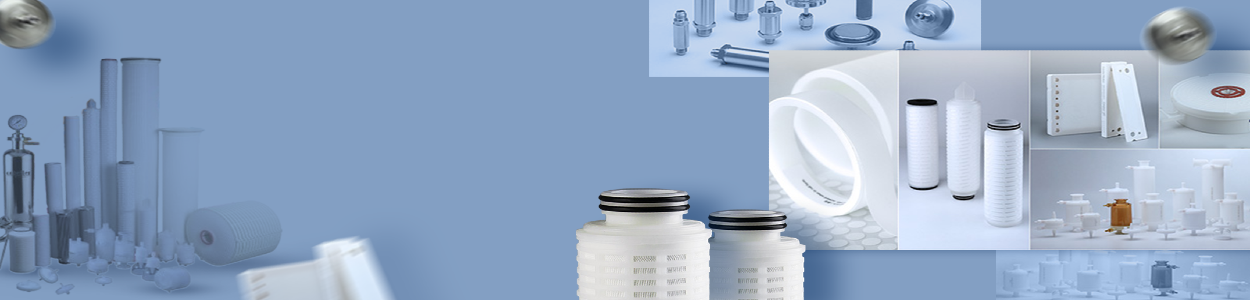
Cobetter sterilizing-grade filters are available in PES, PVDF, PTFE and other membrane materials, with formats including syringe filters, capsule filters, and cartridge filters.
Their gradient pore structures are designed to support filtration flux and dirt-holding capacity, while selected configurations provide low extractables, low leachables, and low protein binding.
Choosing the Right Membrane Filtration Solution
The best membrane filters Australia solution depends on the application—not simply the smallest pore size. From laboratory development and water purification to complex biopharmaceutical fluids and final sterile filtration, membrane material, filter construction, microbial challenge performance, and validation must all be considered together.
With scalable sterile-filtration solutions across different membrane materials and formats, CoPure can support filtration requirements from development laboratories through commercial biopharmaceutical production.
Frequently Asked Questions
What are the best membrane filters for laboratory water purification?
The appropriate membrane depends on the water quality, target contaminants, required sterility, and downstream application. For laboratory applications, membrane selection should consider pore size, membrane chemistry, flow rate, and compatibility with the water system.
What type of membrane filter system is most effective for residential drinking water purification?
Residential drinking-water systems typically use a combination of technologies rather than relying on one membrane alone. Depending on the contaminants, systems may incorporate sediment filtration, activated carbon, ultrafiltration, or reverse osmosis. Selection should be based on the source-water quality and the specific contaminants requiring removal.
Can 0.45 µm filters be used as prefilters?
Yes. A 0.45 µm membrane can be used as a prefiltration stage before a finer sterilizing-grade membrane, helping reduce the particulate burden reaching the final filter.
What membrane materials are available for sterilizing-grade filtration?
Cobetter offers sterilizing-grade solutions using materials including PES and PVDF, as well as other membrane technologies such as PTFE, depending on the application and filter format.
For Further Enquiry Contact- sales@copure.com