Removing particles from complex liquids is essential in biopharmaceutical processing, fermentation, and other high-purity applications. However, when feeds contain suspended solids, colloids, or viscous materials, surface filtration alone may not provide the required dirt-holding capacity.
This is where depth filtration becomes valuable. For laboratories and manufacturers looking for depth filters in Australia, CoPure’s Claricap CSD Lab Capsule Depth Filter offers a compact solution for laboratory-scale clarification and filtration studies.
Depth filtration removes suspended particles throughout the internal structure of a porous filtration medium rather than capturing contaminants only on its surface.
As liquid passes through the filter, particles are retained at different depths according to their size and interactions with the filter medium. This helps distribute the particle load throughout the filter, potentially increasing dirt-holding capacity and extending filter service life.
Depth filtration is commonly used for:
For biopharmaceutical applications, depth filters can serve as an upstream clarification step to reduce particulate loading before subsequent purification processes.
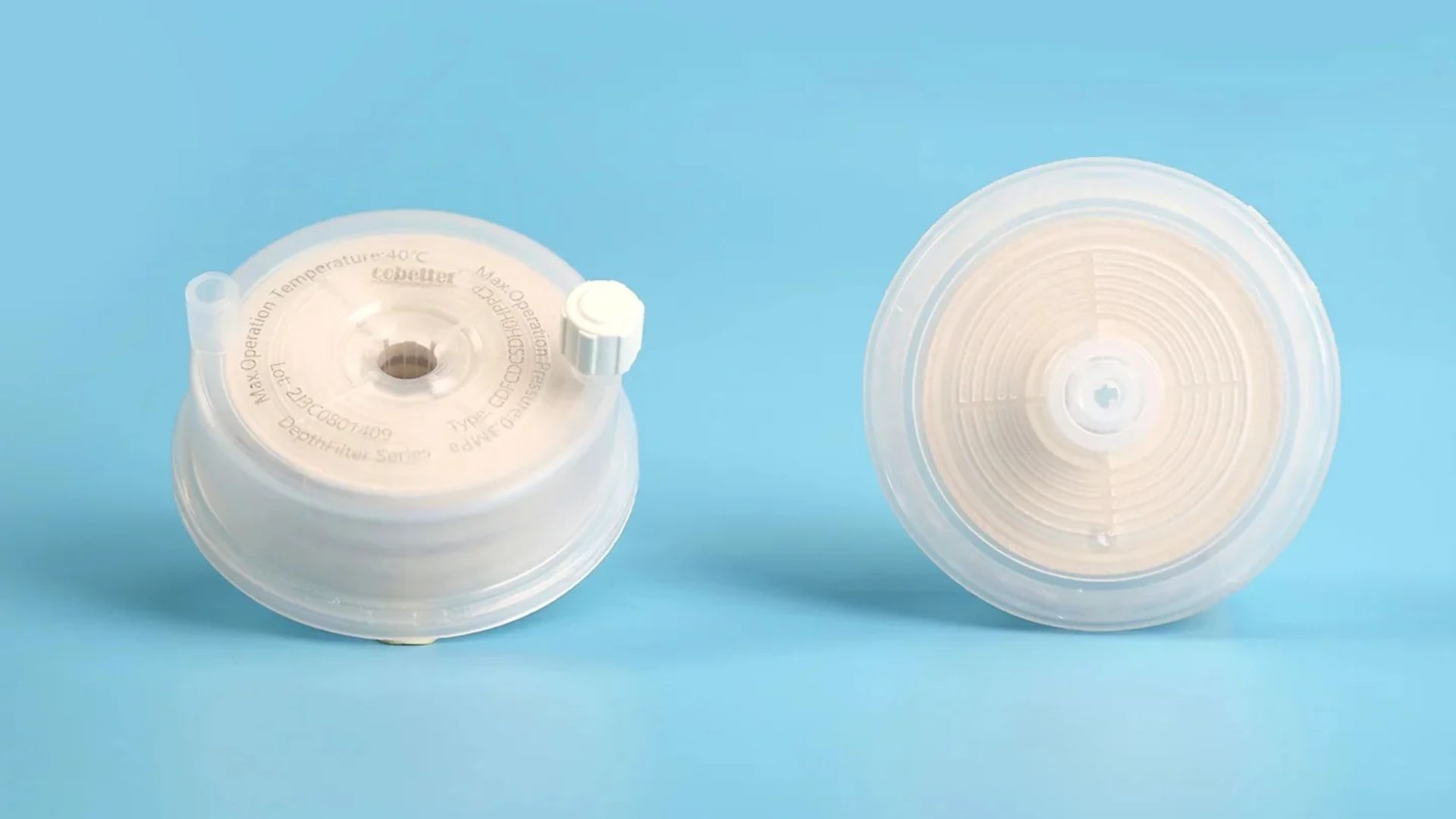
The CoPure’s Claricap CSD Lab Capsule Depth Filter features a compact design with an effective filtration area (EFA) of 23 cm², making it suitable for laboratory-scale filtration studies and process evaluation.
The Claricap CSD and Roheap CSD series use high-purity lignocellulose and inorganic filter aids in a specially engineered three-dimensional structure. This design supports efficient particle retention and high dirt-holding capacity.
Three-dimensional filtration structure: The pore structure becomes progressively finer through the depth of the medium, helping capture particles at different stages of filtration.
Diatomaceous earth filter aid: Its naturally porous structure supports particle adsorption and improves permeability.
Enhanced wet strength: A small amount of synthetic resin improves the filter medium’s wet strength and contributes to its positive charge, supporting particle retention through adsorption.
High-purity materials: High-purity cellulose helps reduce ionic extractables and endotoxin levels, making the series suitable for biopharmaceutical and other high-purity applications.
Selecting the right depth filter requires evaluating the feed, process conditions, and downstream requirements.
Consider these five factors:
For initial laboratory trials, the Claricap CSD Lab Capsule offers a small-scale format to evaluate filtration behaviour before selecting an appropriate production-scale solution.
The Claricap CSD Lab Capsule has an effective filtration area of 23 cm² and uses cellulose, diatomite filter aid, and ionic wet-strength resin.
Its key specifications include:
The product meets the stated USP <87> in vitro cytotoxicity and USP <88> Class VI biological reactivity criteria. Chemical compatibility varies by substance, concentration, and temperature, so the manufacturer’s compatibility data should be checked before use.
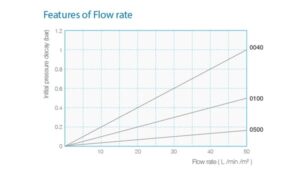
Flushing a depth filter with water before processing helps condition the filter and remove potential residual extractables or loose material from manufacturing and packaging. It can also help prepare the filtration medium for the intended process.
For the Claricap CSD double-layer configuration, the specified flush volume is 100 L/m² at a reference flow rate of 10 L/min/m². Always follow the applicable product instructions and validate the flushing procedure for the process.
Effective depth filtration begins with understanding the liquid being processed and the performance required from the filtration medium. With its three-dimensional structure, high dirt-holding capacity, and compact 23 cm² format, the Claricap CSD Lab Capsule Depth Filter supports laboratory-scale clarification studies for demanding applications.
For organisations evaluating depth filters in Australia, CoPure provides filtration solutions designed to support process development and high-purity filtration requirements.
What materials are used in Cobetter depth filters?
The Claricap CSD and Roheap CSD series use cellulose or lignocellulose, inorganic filter aids such as diatomaceous earth, and ionic wet-strength resin.
Can depth filters be reused?
These products should not automatically be assumed reusable. Reuse depends on the product instructions, application, cleaning procedure, and validated performance. Follow the manufacturer’s guidance and applicable quality requirements.
What is the maximum operating temperature? Can depth filters be sterilised?
The Claricap CSD Lab Capsule has a maximum operating temperature of 40°C. The supplied specifications do not establish a sterilisation cycle for this specific model, so confirm any proposed sterilisation method with the manufacturer before use.
How should a depth filter be operated?
Confirm chemical compatibility, stay within the specified temperature and differential-pressure limits, and follow the recommended flushing procedure. Evaluate performance using the intended process liquid before scaling up.
For Further Enquiry Contact- sales@copure.com
Share: