PK-15 cells, derived from adult porcine kidney tissue, are one of the most established mammalian cell lines used in veterinary virology and vaccine manufacturing. Due to their robustness and susceptibility to multiple porcine viruses, PK-15 cells are widely adopted in large-scale industrial production of virus vaccines, particularly for porcine circovirus (PCV), transmissible gastroenteritis virus (TGEV), and porcine parvovirus (PPV).
As vaccine manufacturers move toward higher productivity, improved biosafety, and regulatory compliance, cell culture media selection plays a critical role. Chemically defined and low-serum media formulations are increasingly preferred to support scalable, reproducible, and contamination-controlled vaccine production processes.
Why PK-15 Cells Are Critical for Virus Vaccine Manufacturing
PK-15 cells exhibit high permissiveness to several economically significant porcine viruses, making them suitable for both research and industrial vaccine production. Key advantages of PK-15 cells include:
- Stable growth characteristics
- Compatibility with both adherent and suspension culture formats
- High viral replication efficiency
- Proven track record in commercial veterinary vaccines
However, traditional serum-rich media introduce challenges such as batch variability, higher downstream purification burden, and increased risk of adventitious agents. This has driven demand for chemically defined and reduced-serum media solutions optimised specifically for PK-15 cells.
Media Requirements for High-Performance PK-15 Cell Culture
To achieve high-density cell growth and consistent virus yields, PK-15 cell culture media must deliver:
- Balanced amino acids, vitamins, and energy sources
- Controlled growth factor availability
- Low variability between batches
- Compatibility with virus infection and replication stages
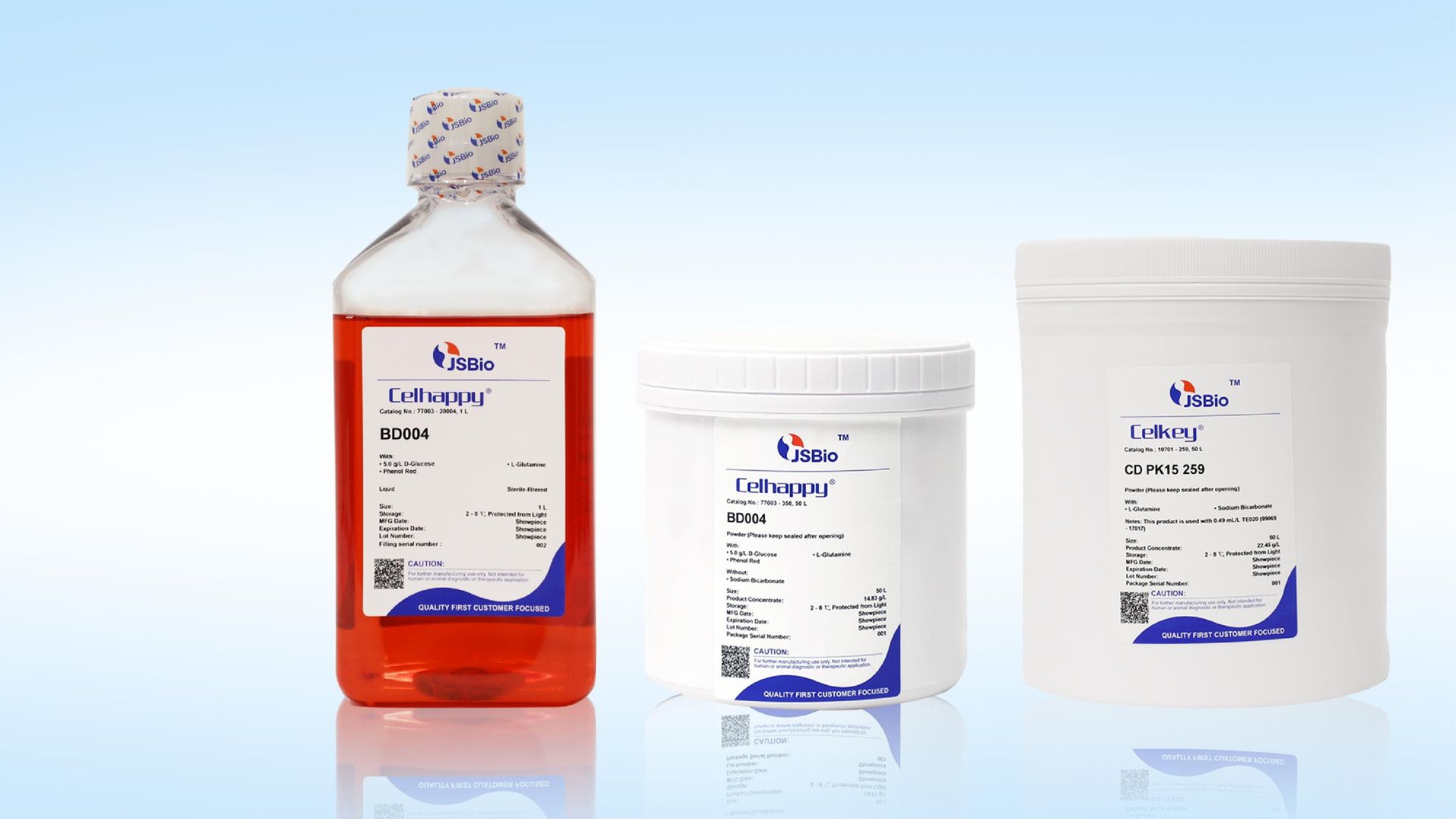
Two specialised media formulations—CD PK15 259 and BD004—address these requirements across suspension and adherent PK-15 cell culture workflows.
CD PK15 259: Chemically Defined Medium for Suspension PK-15 Culture
CD PK15 259 is a chemically defined basal medium developed specifically for PK-15 cell suspension culture. It is designed to support high-density cell growth while maintaining cellular health and virus productivity.
Key Characteristics
- Chemically defined formulation eliminates serum and animal-derived components
- Supports high cell density suspension culture, enabling scale-up in bioreactors
- Enhances virus vaccine production efficiency by maintaining consistent metabolic conditions
- Reduces batch-to-batch variability, supporting GMP manufacturing
By removing serum from the formulation, CD PK15 259 simplifies downstream purification and improves process reproducibility—critical advantages for industrial vaccine manufacturers.
Typical Applications
- Large-scale production of porcine circovirus vaccines
- Manufacturing of transmissible gastroenteritis virus vaccines
- Porcine parvovirus propagation in suspension culture
- Process development and scale-up studies
CD PK15 259 is available in dry powder format, offering flexibility for bulk preparation and cost-effective logistics in industrial settings.
BD004: Low-Serum Medium for Adherent PK-15 Culture
BD004 is a low-serum basal medium optimised for adherent PK-15 cell culture, making it suitable for laboratories and production facilities that maintain traditional monolayer-based processes.
Key Characteristics
- Low serum formulation reduces dependence on fetal bovine serum
- Maintains strong cell adhesion and growth kinetics
- Supports efficient virus infection and replication
- Suitable for both research-scale and industrial applications
BD004 enables manufacturers to transition gradually away from high-serum systems while maintaining compatibility with existing adherent culture infrastructure.
Typical Applications
- Research and development of porcine virus vaccines
- Pilot-scale production using cell factories or roller bottles
- Comparative studies between adherent and suspension processes
BD004 is available in both dry powder and liquid formats, providing operational flexibility across different facility setups.
Supporting Research and Industrial Production
Both CD PK15 259 and BD004 are designed for use in:
- Vaccine research laboratories
- Process development and optimisation
- Commercial veterinary vaccine manufacturing
Their defined and controlled compositions help reduce regulatory risk by limiting unknown components, a key consideration under modern GMP guidelines.
Benefits of Defined and Low-Serum Media in Vaccine Manufacturing
Transitioning to chemically defined or low-serum media offers measurable advantages:
- Improved reproducibility: Reduced variability between production batches
- Enhanced biosafety: Lower risk of contamination from animal-derived components
- Simplified downstream processing: Fewer impurities to remove during purification
- Regulatory alignment: Easier validation and documentation for GMP compliance
For virus vaccine manufacturers using PK-15 cells, these benefits directly translate into higher process robustness and lower cost of goods.
Choosing the Right PK-15 Cell Culture Medium
Selecting the optimal medium depends on the culture format and production strategy:
- Suspension culture and large-scale bioreactors: CD PK15 259
- Adherent culture and gradual serum reduction: BD004
Both media provide a strong foundation for consistent PK-15 cell growth and reliable virus production, supporting the evolving needs of veterinary vaccine manufacturing.
Advancing PK-15–Based Virus Vaccine Production
As global demand for safe and effective veterinary vaccines continues to grow, optimised cell culture systems are essential. CD PK15 259 and BD004 media solutions enable PK-15 cell cultures to achieve higher density, improved consistency, and enhanced virus yields—key drivers of efficient and scalable vaccine production.
By integrating purpose-developed media into PK-15 workflows, manufacturers can strengthen process control, meet regulatory expectations, and accelerate the delivery of high-quality virus vaccines.
For Further Enquiry Contact- sales@copure.com.au