In analytical laboratories, even the smallest impurity can compromise results. Whether performing HPLC, gas chromatography, or ICP analysis, sample integrity is critical. This is why syringe filters in Australia from Copure have become an essential tool for laboratories aiming to achieve consistent, high-quality outcomes.
With increasing demand for accuracy across pharmaceuticals, environmental testing, and food analysis, syringe filtration plays a vital role in ensuring reliable and reproducible data.
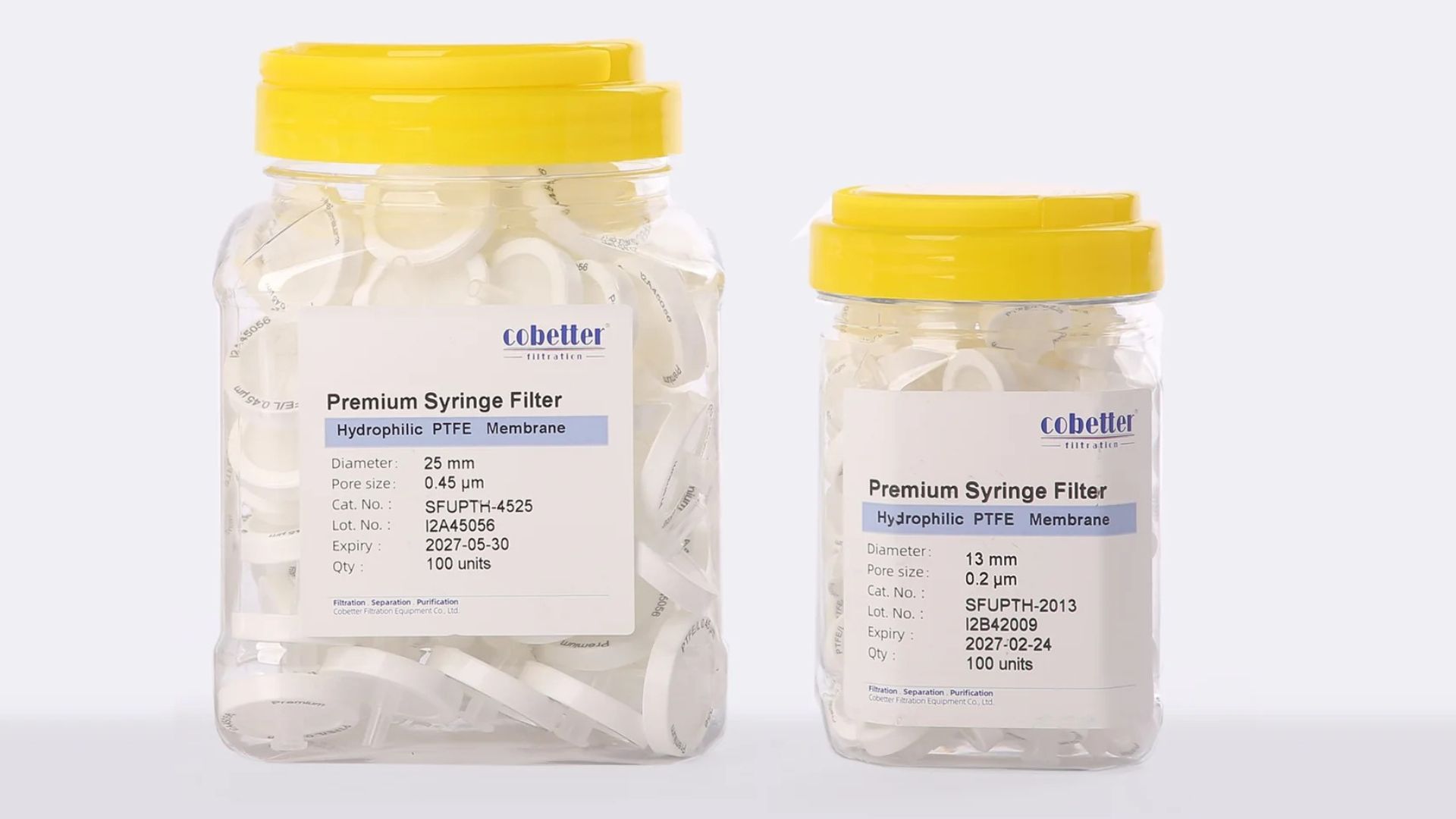
Syringe filters are single-use filtration devices designed to remove particulates from liquid samples before analytical testing. They are typically attached to a syringe via a Luer lock connection, allowing controlled filtration with minimal sample loss.
These filters are widely used for:
High-performance liquid chromatography (HPLC)
Gas chromatography (GC)
Ion chromatography
ICP analysis
Dissolution testing
By removing particulates, syringe filters protect analytical instruments from damage while improving data accuracy.
Analytical instruments operate with extremely tight tolerances. Even microscopic particles can:
Block columns or capillaries
Interfere with detection signals
Reduce instrument lifespan
Syringe filters eliminate these risks by ensuring clean, particle-free samples.
In Australia, where laboratories must meet strict regulatory and quality standards, syringe filtration helps:
Maintain compliance with testing protocols
Improve reproducibility of results
Reduce costly instrument downtime
Modern syringe filters are engineered to deliver both speed and precision. High-quality filters, such as those offered by Cobetter, are designed with:
Efficient filtration reduces processing time without compromising retention. For example:
13 mm filters can achieve flow rates up to 774 mL/min (0.45 μm)
25 mm filters can exceed 700 mL/min at 0.22 μm
This ensures rapid sample preparation, even in high-throughput environments.
Minimising residual liquid within the filter is critical when working with limited or valuable samples.
Typical hold-up volumes:
<25 μL for 13 mm filters
<100 μL for 25 mm filters
<125 μL for 33 mm filters
This helps maximise sample recovery and reduce waste.
Syringe filters are available in multiple pore sizes ranging from 0.2 μm to 10 μm, enabling precise removal of particles based on application requirements.
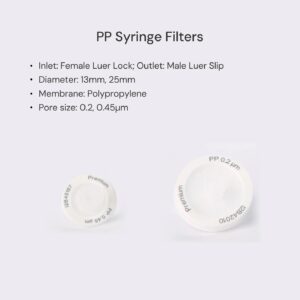
Hydrophobic polypropylene (PP) syringe filters are widely used due to their exceptional chemical resistance and versatility.
Key benefits include:
Compatibility with acids, bases, alcohols, and esters
Stability in both aqueous and organic solutions
Low non-specific binding for improved sample recovery
Their robust design makes them suitable for aggressive solvents and complex sample matrices commonly encountered in analytical workflows.
Selecting the appropriate syringe filter is essential for optimal performance. Laboratories should consider the following factors:
0.2 μm: Sterile filtration and removal of fine particulates
0.45 μm: General clarification and routine analysis
1.0–10 μm: Pre-filtration or removal of larger particles
Choosing the correct pore size ensures efficient filtration without clogging.
Filter size should match the sample volume to maintain efficiency:
| Sample Volume | Filter Size | Filtration Area |
|---|---|---|
| <10 mL | 13 mm | 0.72 cm² |
| 10–100 mL | 25 mm | 3.4 cm² |
| 100–200 mL | 33 mm | 4.5 cm² |
Using the correct size reduces pressure requirements and improves flow rates.
The membrane material must be compatible with the sample to avoid:
Extractables and leachables
Membrane degradation
Sample contamination
Polypropylene filters offer a broad compatibility range, making them a reliable choice for diverse applications.
Preparation of samples for chromatographic analysis
Filtration of buffers and reagents
Removal of particulates from formulations
Filtration of water and soil extracts
Removal of suspended solids before analysis
Clarification of liquid samples
Quality control testing
Handling of aggressive solvents
Pre-filtration for analytical instrumentation
To ensure consistent results, proper usage is essential:
Load the sample into a clean syringe
Attach the filter securely using the Luer lock connection
Hold the syringe vertically and apply gentle, steady pressure
Avoid excessive force to prevent membrane damage
Dispose of the filter after single use
Following these steps ensures optimal filtration performance and prevents contamination.
From an operational standpoint, syringe filters offer several advantages:
Reduced instrument maintenance costs by preventing clogging
Faster sample preparation, improving lab productivity
Single-use design, eliminating cleaning and cross-contamination risks
For laboratories in Australia managing high sample volumes, these benefits translate into improved efficiency and cost savings.
As analytical techniques become more sensitive, the demand for high-performance filtration solutions will continue to grow. Innovations are likely to focus on:
Enhanced membrane materials with even lower binding
Improved flow dynamics for faster processing
Greater consistency across batches
Syringe filters will remain a fundamental component of laboratory workflows, supporting accurate and reliable analysis.
Syringe filtration is a critical step in ensuring the accuracy and longevity of analytical systems. With their fast flow rates, high retention efficiency, and broad chemical compatibility, modern solutions provide a dependable approach to sample preparation.
For laboratories seeking high-quality syringe filters in Australia, advanced options like Copure’s range deliver the performance, consistency, and efficiency required to meet today’s analytical demands.
For Further Enquiry Contact- sales@copure.com.au
Share: