Laboratories are under constant pressure to process more samples without compromising consistency or data quality. Traditional one-sample-at-a-time filtration can become a bottleneck when hundreds of samples need to be prepared for analysis.
This is where 96-well filter plates can transform laboratory workflows. Designed for parallel processing, multi-well filtration enables researchers to prepare multiple samples simultaneously while supporting manual, semi-automated, and robotic workflows.
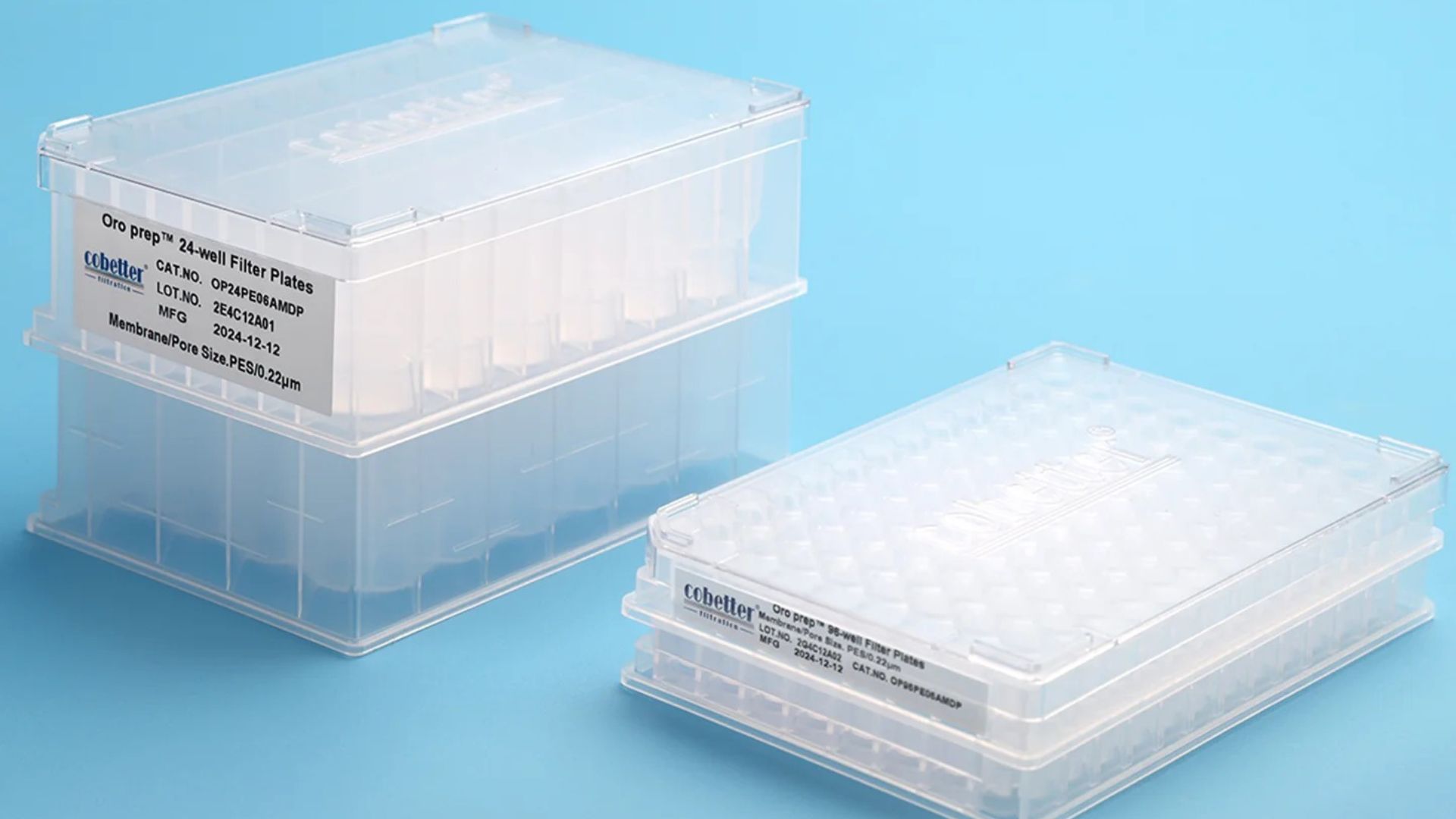
For laboratories looking for efficient lab filtration in Australia, CoPure’s Oro prep™ 96-well Filter Plates provide a flexible solution for high-throughput sample preparation.
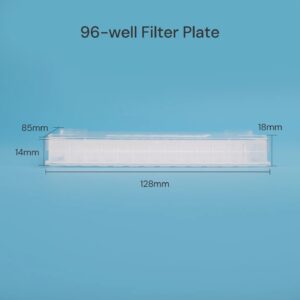
A 96-well filter plate is a multi-well laboratory device containing an individual filtration area within each well. Instead of filtering samples sequentially, researchers can process dozens of samples simultaneously.
The Oro prep™ range is available in 24-well and 96-well formats, allowing laboratories to select the configuration according to sample volume and throughput requirements.
The 96-well format provides a recommended working volume of 300 µL per well, making it particularly suitable for rapid sample preparation where sample volumes are relatively small.
Sample preparation can consume significant laboratory time, particularly when workflows involve:
Processing samples individually can increase hands-on time and introduce variability between samples.
A multi-well format allows multiple samples to undergo the same filtration step simultaneously. This can improve workflow efficiency while making the process easier to integrate with automated liquid handling systems.
For laboratories investing in lab filters in Australia, automation compatibility is increasingly important as research workflows become more data-intensive and throughput-focused.
CoPure Oro prep™ 96-well Filter Plates are designed for high-throughput screening, laboratory analysis, and sample preparation.
The plates feature a polypropylene housing, providing broad chemical resistance, while different membrane materials allow researchers to select a filtration surface appropriate for their samples.
The 96-well hydrophilic PTFE version features:
The filter plates can also be used with vacuum filtration, positive-pressure filtration, or centrifugation, depending on the application and validated operating procedure.
PTFE is widely recognised for its excellent chemical resistance, making it useful when working with aggressive organic solvents.
However, conventional PTFE membranes are naturally hydrophobic, which can make aqueous filtration difficult. Hydrophilic PTFE membranes are modified to allow aqueous solutions to wet the membrane more readily.
This makes hydrophilic PTFE useful when a workflow involves both:
For researchers working with chemically diverse samples, this versatility can simplify membrane selection and reduce the need to change filtration platforms between applications.
A major advantage of the Oro prep™ platform is that laboratories aren’t restricted to one membrane material.
Available options include:
Suitable for aqueous filtration and particle removal, particularly where rapid processing is required.
Designed for rapid filtration of aqueous solutions and organic solvents.
Suitable for biological solutions and buffers.
Used for particle removal and sample clarification.
Designed for concentration applications involving peptides, proteins, oligonucleotides, DNA, and RNA.
Designed for rapid separation and purification of negatively charged biomolecules.
This range allows researchers to select the membrane based on sample chemistry, target molecules, and intended application, rather than adapting the sample to a single filter material.
Modern laboratories increasingly use robotic liquid handling to improve throughput and reduce repetitive manual operations.
Oro prep™ 96-well filter plates are compatible with automated handling platforms and can be incorporated into:
This makes them particularly relevant to high-throughput screening laboratories and analytical workflows where sample numbers can quickly scale from dozens to hundreds or thousands.
The standard microplate format also makes integration into established laboratory workflows more straightforward.
Quality and Manufacturing Standards
When selecting lab filtration in Australia, filtration performance is only one consideration. Product consistency and manufacturing controls are equally important.
Oro prep™ filter plates are manufactured under an ISO 9001:2015 Quality Management System and produced for use in conformance with cGMP.
CoPure also provides Certificates of Analysis/Certificates of Quality (COA/COQ) with shipments, supporting laboratories that require documented quality information.
The 96-well hydrophilic PTFE plates are supplied in packs of six and individually packaged within double PE bags. Sterile versions are available, with gamma irradiation specified at 25–45 kGy.
Laboratory filtration is increasingly moving toward workflows that combine speed, reproducibility, automation, and sample conservation.
Multi-well filtration addresses these requirements by allowing researchers to process multiple samples in parallel while using relatively small working volumes.
For laboratories evaluating lab filtration Australia solutions, the ability to select between membrane chemistries and integrate filtration with automated equipment can be just as important as filtration performance itself.
Efficient sample preparation is essential for high-throughput laboratory analysis. Oro prep™ 96-well Filter Plates provide a practical way to process multiple samples simultaneously while supporting vacuum, pressure, and centrifugation-based workflows.
With hydrophilic PTFE and other membrane options, low hold-up volume, automation compatibility, and documented quality standards, CoPure’s multi-well filtration platform provides laboratories with a flexible solution for modern sample preparation.
For researchers seeking reliable lab filters in Australia, choosing a filtration format designed around both today’s analytical requirements and tomorrow’s automation needs can help create a faster, more scalable laboratory workflow.
For Further Enquiry Contact- sales@copure.com
Share: