Protein purification is one of the most critical stages in biopharmaceutical manufacturing, enzyme production, and biotechnology research. Among the many separation techniques available, protein precipitation with ammonium sulfate remains a trusted method for concentrating proteins and reducing impurities before downstream purification. However, precipitation generates suspended solids and aggregates that must be removed efficiently to protect downstream filtration and chromatography systems.
This is where high-capacity depth filtration becomes indispensable. By combining precipitation of proteins with advanced depth filtration, laboratories and manufacturers can improve product recovery, reduce processing time, and extend the life of downstream equipment.
Protein precipitation is the process of reducing a protein’s solubility, causing it to separate from the surrounding solution as a solid or semi-solid precipitate. The technique is widely used to:
The efficiency of protein precipitation depends on factors such as pH, temperature, ionic strength, and the choice of precipitating agent.
Among various precipitation methods, protein precipitation with ammonium sulfate is considered one of the most reliable because it preserves protein structure while offering excellent recovery.
The process works through a phenomenon known as “salting out.” As ammonium sulfate concentration increases, water molecules become more associated with dissolved salt ions, leaving fewer water molecules available to hydrate proteins. This reduction in protein solubility causes proteins to aggregate and precipitate from solution.
Advantages include:
For decades, ammonium sulfate precipitation has been a standard step in producing enzymes, antibodies, vaccines, and recombinant proteins.
While precipitation effectively separates proteins, it also creates complex suspensions containing:
If these solids are not removed efficiently, they can:
This clarifies an essential bridge between precipitation and downstream purification.
Unlike surface filters that capture particles only on the membrane surface, depth filters retain contaminants throughout a three-dimensional filtration matrix. This allows them to process significantly higher solid loads before becoming blocked.
For precipitation workflows, depth filtration offers:
This makes depth filtration particularly valuable for highly turbid biological solutions.
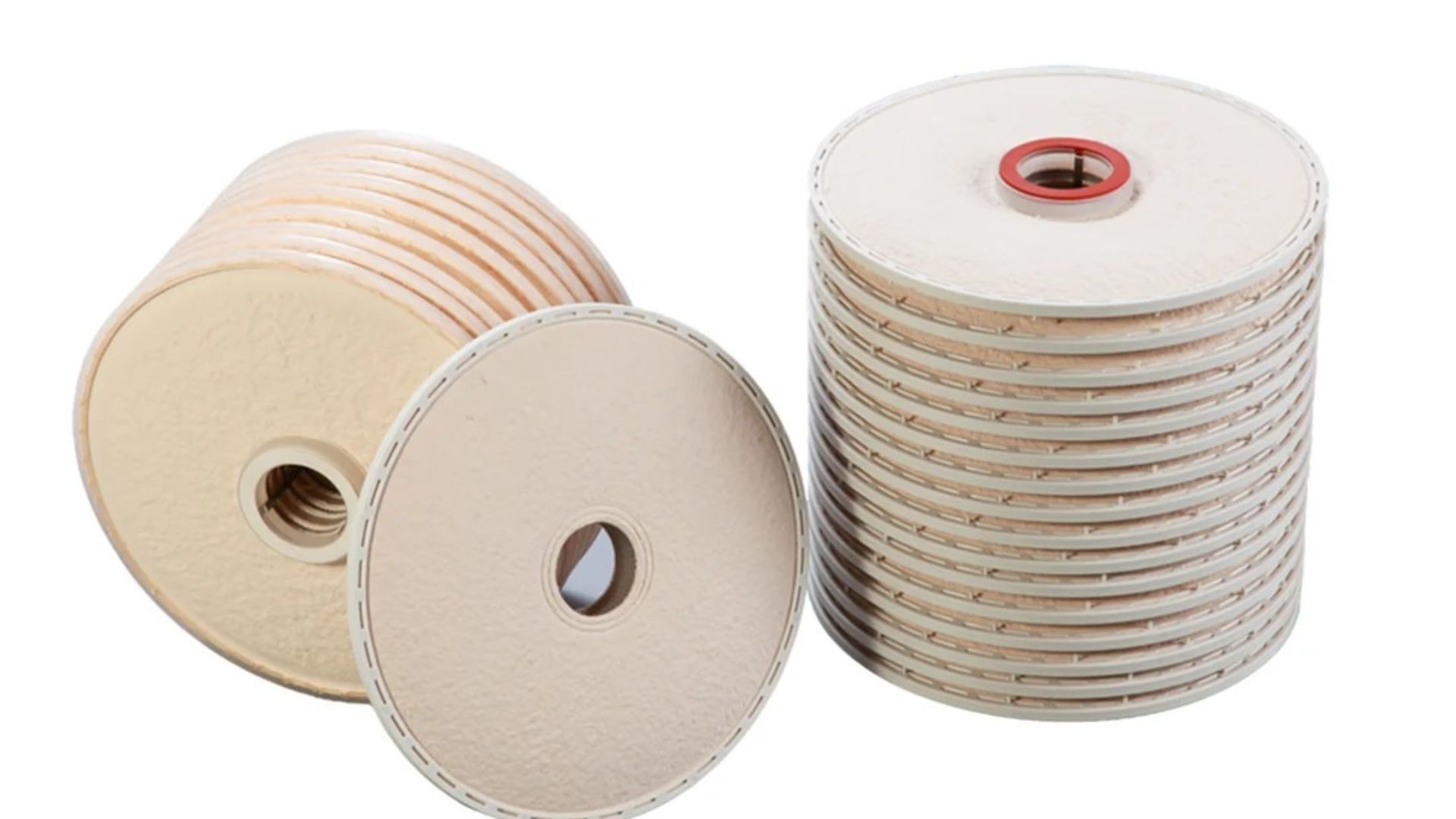
CoPure’s Roheap CSD Double-layer Depth Filter Lenticular Capsule has been developed for demanding clarification applications involving cell culture media, fermentation broths, serum, enzymes, and other biological products.
Its filtration media combine high-purity cellulose, diatomite filter aid, and ionic wet-strength resin to create a robust three-dimensional depth structure.
This design delivers several performance advantages.
The internal pore structure becomes progressively finer through the filter depth, allowing larger particles to be captured first while smaller contaminants are retained deeper within the media. This staged retention maximises filtration efficiency without rapidly blocking the filter.
The crisscrossing depth matrix traps contaminants throughout the filter rather than only on its surface. As a result, the filter processes larger volumes of highly turbid fluids before requiring replacement.
Natural porous diatomaceous earth provides excellent adsorption of suspended particles, while the ionic wet-strength resin contributes mechanical strength and, in positive-charge (PC) grades, enhances adsorption of negatively charged impurities.
Roheap CSD depth filters are well suited for clarification following precipitation of proteins across numerous bioprocesses, including:
By reducing particulate loads early, the filters improve the efficiency of subsequent sterile filtration and chromatography operations.
Biopharmaceutical manufacturing demands materials that minimise contamination while maintaining consistent performance.
Roheap CSD filters are manufactured using high-purity raw materials and automated production processes with strict quality control. They also offer:
These characteristics make the filters suitable for high-purity pharmaceutical and biotechnology applications.
One advantage of the CoPure depth filtration platform is scalability. Laboratories can optimise clarification using Claricap CSD laboratory capsules before transitioning to Roheap CSD lenticular capsules for pilot and production-scale manufacturing.
This enables process consistency while reducing development risk and simplifying scale-up.
Although protein precipitation with ammonium sulfate remains one of the most effective techniques for concentrating and fractionating proteins, successful downstream purification depends on efficient clarification. Removing aggregates, cell debris, and suspended solids protects valuable downstream equipment and helps maximise product recovery.
CoPure’s Roheap CSD Double-layer Depth Filter Lenticular Capsules provide the high dirt-holding capacity, progressive particle retention, and scalable performance needed to support modern bioprocessing. Whether clarifying fermentation broths, enzyme preparations, or biological intermediates following precipitation of proteins, they deliver reliable filtration that supports consistent product quality and efficient manufacturing.
What is protein precipitation with ammonium sulfate?
It is a protein purification technique that uses increasing salt concentration to reduce protein solubility, causing proteins to precipitate while largely preserving their biological activity.
Why is depth filtration used after protein precipitation?
Depth filters remove protein aggregates, cell debris, and suspended solids, protecting downstream membrane filters and chromatography columns while improving overall process efficiency.
What applications are Roheap CSD depth filters suitable for?
They are ideal for fermentation broth clarification, cell culture media, enzyme preparations, serum and blood products, and clarification of colloidal or viscous biological solutions.
What makes Roheap CSD filters suitable for biopharmaceutical processing?
Their high-purity cellulose construction, low endotoxin levels, USP biological safety compliance, and high dirt-holding capacity make them well suited for high-purity pharmaceutical and biotechnology applications.
For Further Enquiry Contact- sales@copure.com
Share: