In modern analytical and life science laboratories, sample quality directly influences the accuracy of test results. Even microscopic particles can clog chromatographic columns, interfere with detectors, or contaminate valuable samples. This is where syringe filters become an essential part of laboratory workflows.
A syringe filter is a single-use filtration device that attaches to the end of a laboratory syringe. It contains a microporous membrane that removes suspended particles, microorganisms, or other contaminants from liquid samples before they are analysed or transferred.
Syringe filters are widely used across:
By filtering samples immediately before analysis, laboratories improve instrument performance, reduce contamination risks, and obtain more consistent analytical results.
Understanding what syringe filters are used for helps laboratories choose the right filtration solution for different applications.
Particles present in samples can damage expensive chromatography columns or create inconsistent analytical data.
Syringe filters are commonly used before:
Clean samples help extend column life while maintaining accurate and reproducible results.
Sterile syringe filters remove bacteria and microorganisms from heat-sensitive solutions that cannot be autoclaved.
Typical sterile filtration applications include:
Gamma-sterilised syringe filters provide additional assurance when sterility is essential.
Many biological samples contain proteins that can adsorb onto filtration membranes, leading to sample loss.
Regenerated Cellulose (RC) syringe filters are particularly suitable because they provide:
This makes them ideal for antibodies, peptides, enzymes, and protein-containing samples.
Different membrane materials offer different chemical compatibility and performance characteristics.
RC syringe filters are widely preferred because they combine:
These characteristics make RC membranes particularly suitable for pharmaceutical, biotechnology, and analytical laboratories where preserving sample integrity is critical.
Many laboratories ask how to use a syringe filter to maximise filtration efficiency while protecting analytical equipment.
Follow these simple steps:
Choose a membrane based on:
For protein-containing samples, Regenerated Cellulose is an excellent choice due to its low protein binding characteristics.
Common pore sizes include:
Draw the sample carefully into a clean laboratory syringe while minimising air bubbles.
Securely connect the syringe filter using the Luer-lock or Luer-slip fitting to prevent leakage during filtration.
Apply steady, even pressure.
Avoid excessive force, which may:
Syringe filters are designed for single-use operation to eliminate cross-contamination between samples.
When learning how to use a sterile syringe filter, maintaining sterility is just as important as filtration.
Best practices include:
These simple practices help maintain sterile conditions throughout sample preparation.
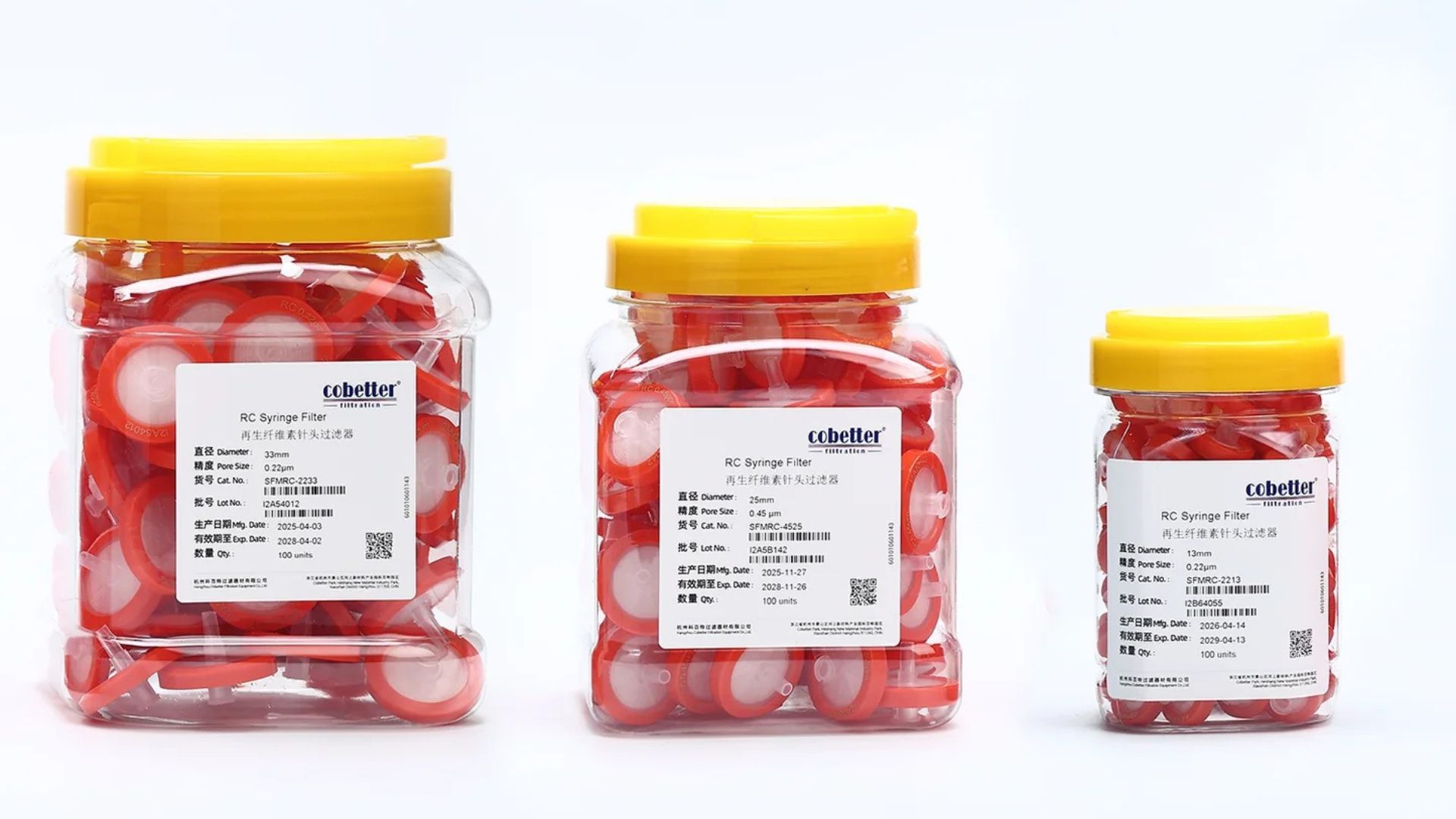
Laboratories often select syringe filter diameters based on sample volume.
Typical options include:
| Filter Size | Typical Sample Volume |
|---|---|
| 13 mm | Small-volume analytical samples |
| 25 mm | Routine laboratory filtration |
| 33 mm | Larger sample volumes with higher throughput |
Choosing the correct diameter improves filtration efficiency while reducing processing time.
CoPure Regenerated Cellulose Syringe Filters are engineered for dependable laboratory performance.
Key features include:
Manufactured under an ISO 9001:2015 Quality Management System, each shipment includes a COA/COQ. The filters are also tested to achieve Endotoxin levels below 0.25 EU/mL (USP <85>, LAL aqueous extraction), supporting laboratories that require stringent quality standards.
Whether preparing samples for chromatography, protecting analytical instruments, or performing sterile filtration, syringe filters remain one of the simplest yet most valuable laboratory consumables.
Copure provides high-quality Regenerated Cellulose syringe filters with low protein binding and excellent chemical compatibility, helping ensure reliable, reproducible results across pharmaceutical, biotechnology, environmental, and research applications.
For Further Enquiry Contact- sales@copure.com
Share: