As biopharmaceutical manufacturing becomes more complex, purification technologies must evolve to support higher productivity, faster processing, and improved biomolecule recovery. Traditional packed-bed chromatography systems have long been used for downstream purification, but increasing process demands are driving the industry toward faster and more scalable alternatives.
This shift has accelerated the adoption of advanced membrane filters in Australia, particularly membrane chromatography systems designed for high-throughput biomolecule purification.
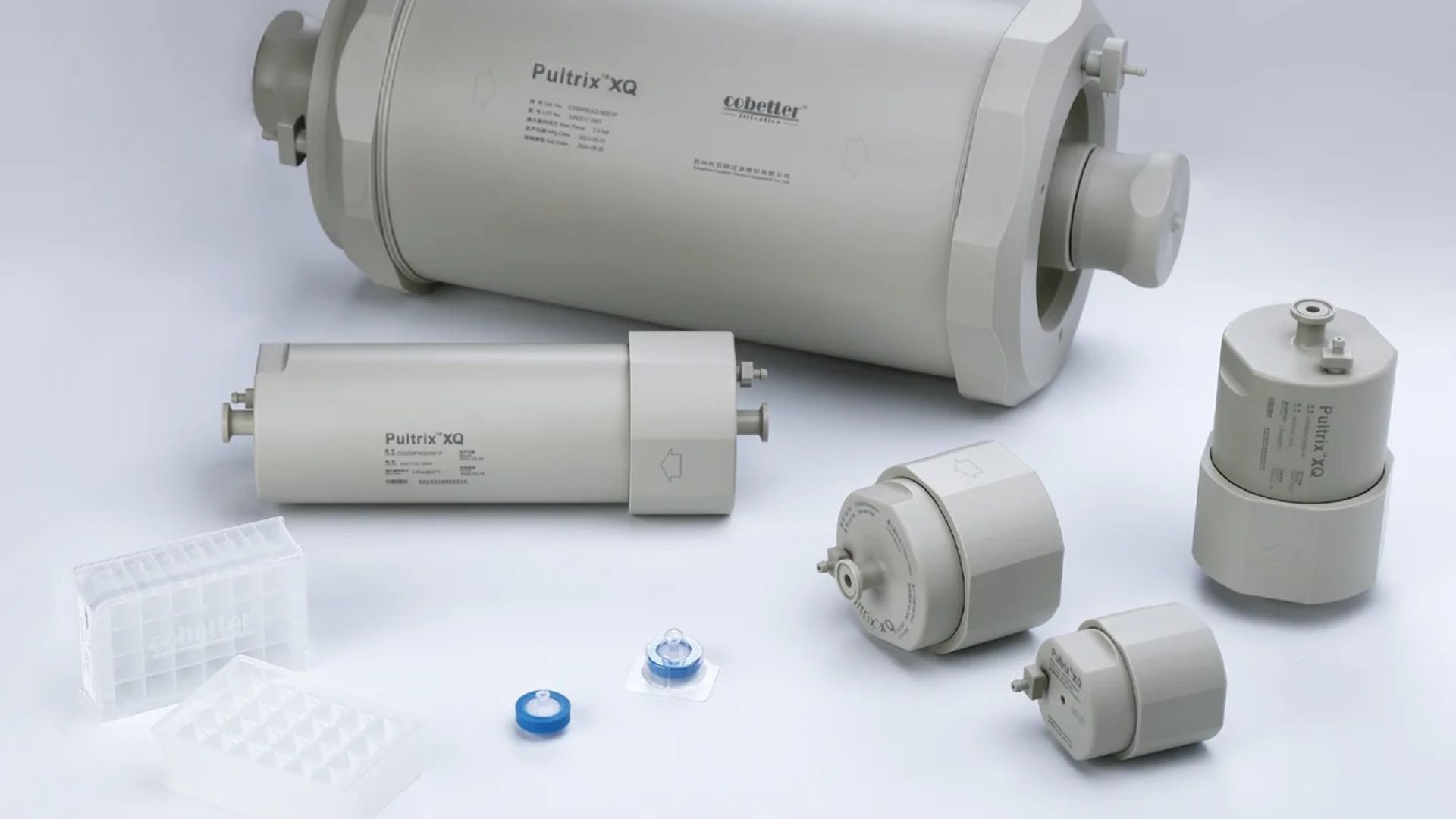
At CoPure, the Pultrix™ XQ Membrane Chromatography Process Filter offers a next-generation solution for capturing and purifying negatively charged biomolecules using strong anion exchange membrane technology.
Biopharmaceutical processes increasingly require rapid purification of large biomolecules, such as:
Traditional resin-based chromatography systems often rely on diffusive mass transfer, where molecules slowly migrate into resin pores. While effective for some applications, this approach can create bottlenecks when processing large biomolecules.
Membrane chromatography addresses these limitations by using convective flow through highly porous membranes. This enables faster transport of biomolecules to binding sites, significantly increasing processing speed and efficiency.
As Australia’s biotechnology and pharmaceutical sectors continue to expand, demand for high-performance membrane filters in Australia is growing across vaccine production, gene therapy development, and advanced biologics manufacturing.
The Pultrix™ XQ Membrane Chromatography Process Filter is a strong anion exchange membrane adsorber engineered for high-capacity purification workflows.
The system uses a crosslinked polymer coating functionalised with high-density quaternary ammonium (Q) ligands that selectively bind negatively charged biomolecules.
Its highly interconnected membrane structure with a nominal pore size of 2 μm enables efficient convective flow and excellent accessibility to binding sites.
This design allows the Pultrix™ XQ membrane to efficiently capture:
Compared with conventional chromatography columns, membrane adsorbers offer significantly faster process times and improved productivity.
One of the key performance advantages of membrane chromatography is convective mass transfer.
In traditional resin systems, molecules diffuse slowly into internal resin pores. Large biomolecules often experience transport limitations that reduce process efficiency.
The Pultrix™ XQ membrane adsorber uses an open-channel membrane structure that allows biomolecules to flow directly through the membrane while interacting with active binding sites.
This creates several operational benefits:
Charged biomolecules can be captured in a single pass without relying heavily on extended retention times.
Modern bioprocessing facilities prioritise productivity and manufacturing efficiency.
Pultrix™ XQ membrane adsorbers support flow rates up to 10 membrane volumes per minute within operational pressure limits. Compared to traditional packed-bed chromatography systems, membrane adsorbers can increase productivity by approximately 30–50 times.
This performance advantage is especially valuable in commercial-scale manufacturing environments where process time directly impacts operational costs.
Recommended flow rates include:
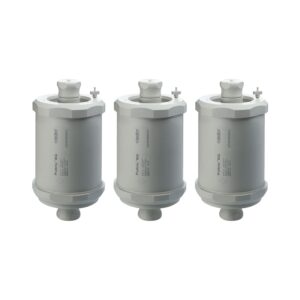
The radial flow capsule design also helps maintain efficient fluid distribution across the membrane structure.
Large biomolecules often present purification challenges due to steric limitations and slow diffusion in conventional resins.
The Pultrix™ XQ membrane adsorber features:
This combination supports strong dynamic binding capacity for large biological entities, including:
The result is improved purification efficiency while reducing process complexity and operational costs.
Scalability remains one of the most important considerations in biopharmaceutical manufacturing.
Pultrix™ XQ membrane adsorbers are available across multiple process scales, supporting a smooth transition from process development to commercial manufacturing.
Available membrane volumes include:
This linear scalability helps manufacturers maintain predictable purification performance during scale-up.
The Pultrix™ XQ membrane adsorber is designed for multiple downstream purification applications.
The system supports plasmid purification directly from lysate by integrating:
This streamlined workflow can reduce process complexity compared with traditional multi-step purification methods.
Membrane adsorbers are increasingly used for impurity removal in biologics manufacturing.
Pultrix™ XQ systems are effective for removing:
Validation testing demonstrates virus clearance performance greater than 4 log reduction even after 50 reuse cycles under specific operating conditions.
This level of performance supports robust downstream purification strategies for sensitive biologic products.
The membrane adsorber is also designed for the purification of:
Its high flow capability and strong binding performance support efficient large-scale processing.
Biopharmaceutical filtration systems must comply with strict manufacturing and quality requirements.
Pultrix™ XQ membrane adsorbers are manufactured under an ISO 9001:2015 Quality Management System and in conformance with cGMP standards.
Additional quality features include:
The system also supports practical storage and operational flexibility, including:
As biologics manufacturing continues to advance, purification technologies must support higher throughput, scalability, and process reliability.
Modern membrane filters in Australia are increasingly expected to deliver:
The Pultrix™ XQ Membrane Chromatography Process Filter from CoPure combines strong anion exchange chemistry with advanced membrane technology to support high-efficiency downstream bioprocessing.
For manufacturers seeking faster purification workflows and improved process economics, membrane chromatography is becoming a critical technology in next-generation biologics production.
For Further Enquiry Contact- sales@copure.com
Share: