Industrial water treatment and process manufacturing increasingly rely on advanced membrane technologies to improve efficiency, reduce chemical consumption, and achieve consistent product quality. As industries seek more sustainable and cost-effective solutions, demand for high-performance membrane filters Australia continues to grow across sectors such as pharmaceuticals, biotechnology, food and beverage, microelectronics, and water treatment. Copure supports these industries with advanced membrane filtration solutions designed to enhance operational performance and reliability.
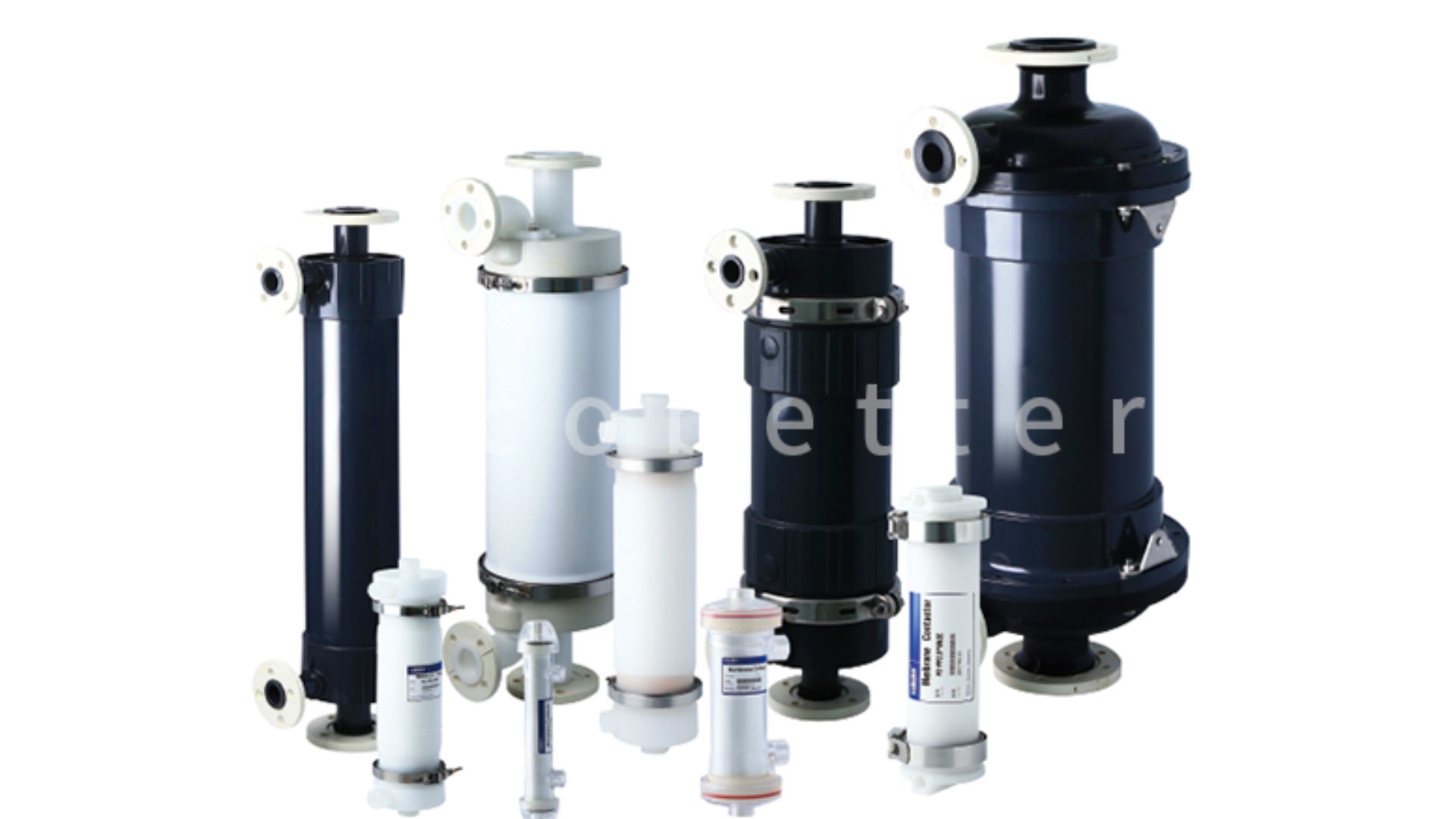
Among the latest innovations in membrane technology is the Arrayforce™ Membrane Contactor, a specialised hollow-fiber membrane system designed for highly efficient gas-liquid transfer applications. Unlike conventional filtration systems, membrane contactors enable precise gas exchange without direct mixing of gas and liquid phases, offering significant advantages in process control and operational efficiency.
A membrane contactor is a device that uses a hydrophobic microporous membrane to facilitate the transfer of gases between a gas phase and a liquid phase. The membrane acts as a barrier that allows gas molecules to pass through while preventing liquids from crossing the membrane.
The Arrayforce™ Membrane Contactor utilises hydrophobic hollow-fiber membranes with uniformly distributed micropores. This design creates a large surface area for gas exchange while maintaining complete separation between the gas and liquid streams.
The result is highly efficient mass transfer for applications such as:
In many industrial processes, dissolved gases can significantly impact product quality, equipment performance, and operational stability.
For example:
Traditional approaches such as vacuum towers, packed columns, and chemical treatment methods often require large footprints, higher energy consumption, and increased maintenance.
Membrane contactors offer a compact alternative with superior transfer efficiency and precise process control.

The Arrayforce™ Membrane Contactor employs advanced hollow-fiber membrane technology where gas molecules diffuse through the membrane pores while liquids remain isolated.
Key design advantages include:
Thousands of hollow fibers create an extensive gas-liquid contact area within a compact module. This significantly increases mass transfer efficiency compared to conventional systems.
The membrane’s hydrophobic properties prevent water penetration while allowing gas molecules to move freely across the membrane wall.
Advanced manufacturing technology ensures consistent pore size distribution, improving gas transfer performance and maximising membrane utilisation.
The Arrayforce™ range accommodates flow rates from laboratory-scale applications below 500 mL/min to industrial systems handling up to 91 m³/hr, enabling easy scalability across industries.
The growing adoption of advanced membrane filters in Australia reflects the need for reliable, efficient, and sustainable processing technologies.
Membrane contactors are widely used for dissolved oxygen removal, carbon dioxide stripping, and pH control in industrial water systems.
Biopharmaceutical processes require precise gas control to maintain product integrity and comply with stringent quality standards.
Degassing applications help improve product stability, reduce oxidation, and enhance overall product quality.
Ultrapure water systems rely on effective dissolved gas removal to prevent defects and ensure production consistency.
Gas-liquid transfer operations benefit from higher efficiency, lower energy consumption, and reduced equipment footprints.
When compared with conventional gas transfer technologies, membrane contactors provide several operational advantages:
These advantages make membrane contactors a valuable complement to modern membrane filtration and purification systems.
Selecting suitable membrane solutions involves more than simply matching flow rates. Factors such as chemical compatibility, operating conditions, gas transfer requirements, and long-term reliability all influence system performance.
As industries across Australia continue to modernise water treatment and manufacturing operations, advanced membrane technologies such as the Arrayforce™ Membrane Contactor from Copure provide an effective solution for improving efficiency while supporting sustainability goals.
For organisations seeking innovative membrane filters in Australia, membrane contactor technology offers a proven approach to enhancing gas transfer performance, reducing operational costs, and achieving greater process reliability.
A membrane contactor is a device that uses a hydrophobic membrane to transfer gases between gas and liquid streams without direct mixing of the two phases.
Traditional membrane filters primarily separate particles or contaminants from liquids, while membrane contactors are designed specifically for gas transfer and dissolved gas management.
Industries including water treatment, pharmaceuticals, biotechnology, food and beverage, electronics manufacturing, and chemical processing commonly use membrane contactors.
Yes. Membrane contactors are highly effective for dissolved oxygen removal and are widely used in deaeration applications.
Yes. Arrayforce™ Membrane Contactors are available in multiple configurations, supporting flow rates from laboratory-scale systems to industrial applications exceeding 90 m³/hr.
Australian industries increasingly adopt membrane technologies because they improve efficiency, reduce chemical consumption, lower energy requirements, and support sustainability objectives.
For Further Enquiry Contact- sales@copure.com
Share: