In high-precision environments—biopharmaceutical labs, fermentation facilities, and analytical setups—air purity is just as critical as liquid integrity. Yet, air and gas filtration often receive less attention than liquid-phase workflows. That’s changing. Across lab filtration in Australia, venting filters are becoming a key control point for contamination prevention, pressure balance, and system reliability.
This shift is driven by increasing regulatory scrutiny, the rise of single-use systems, and the need for consistent, reproducible outcomes. At the centre of this evolution are hydrophobic membrane-based vent filters—designed to maintain sterility while enabling efficient gas exchange.
Venting filters serve a deceptively simple role: allowing air or gas to pass while blocking contaminants. But in practice, they directly influence:
Sterility assurance in bioreactors and storage vessels
Pressure regulation during filling, draining, or fermentation
Product integrity by preventing microbial ingress
In applications like fermentation or vaccine production, even minor contamination can result in batch failure—costing thousands to millions of dollars. This is why labs across Australia are increasingly integrating sterilising-grade vent filters into their workflows.
Most high-performance vent filters use hydrophobic PTFE (polytetrafluoroethylene) membranes. These membranes repel water while allowing gases to pass freely. This property is crucial because it:
Prevents liquid intrusion into the filter
Maintains airflow even in high-humidity environments
Ensures consistent microbial retention
A 0.2 μm pore size—standard in sterilising-grade filters—is widely accepted for removing bacteria and fine particulates. In fact, validation against Brevundimonas diminuta (a benchmark organism in filtration testing) ensures retention efficiency of at least 10⁷ CFU/cm², meeting stringent global standards.
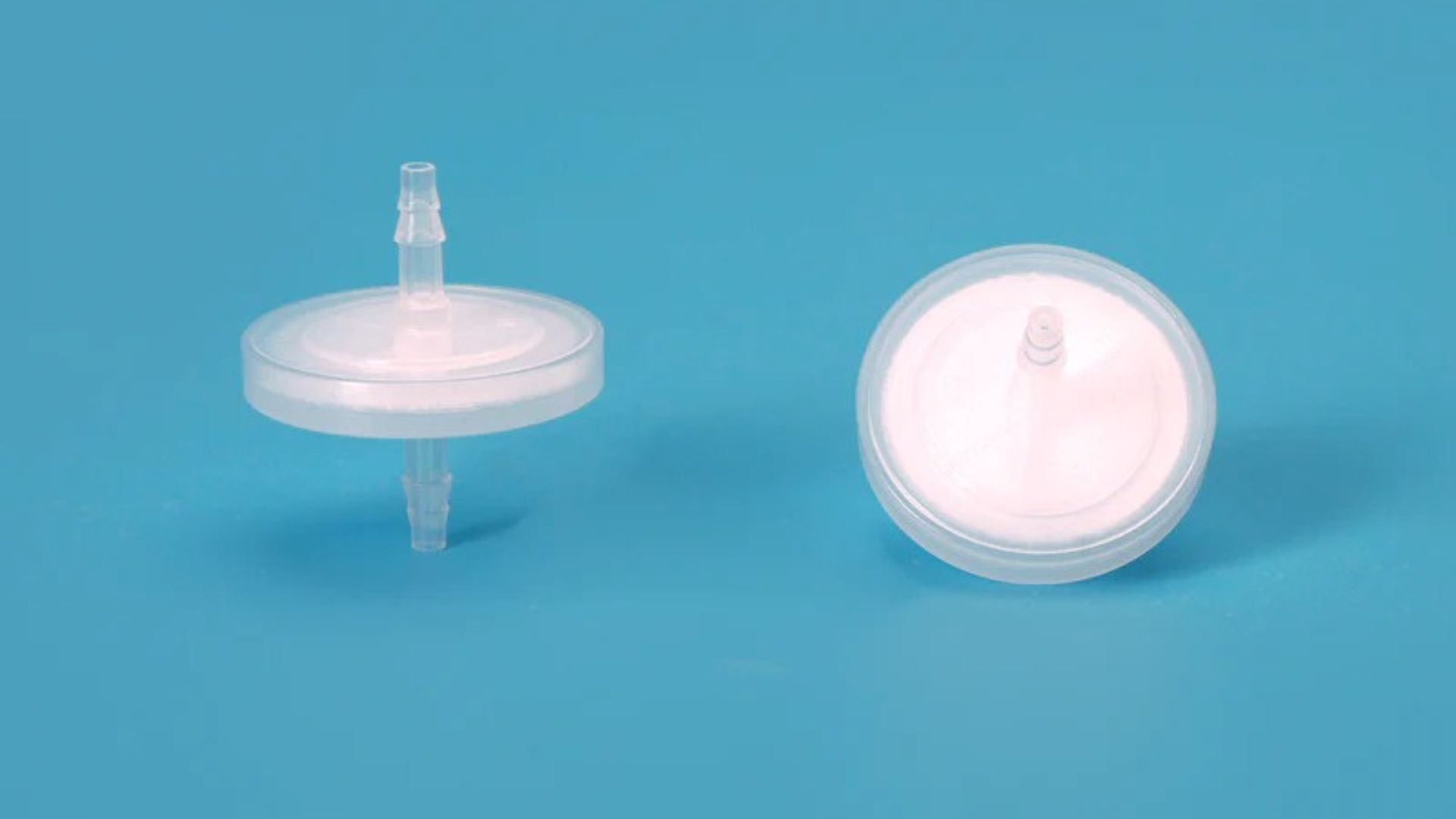
Copure’s Aegivast™ ACE SFB33 vent filters are engineered for high-performance gas filtration in demanding lab environments. Designed with a 0.2 μm hydrophobic PTFE membrane, these filters combine sterility assurance with operational efficiency.
Low pressure drop: Enables smooth airflow without stressing the system
High retention efficiency: Reliable barrier against bacteria and particulates
Optimised filtration area (4.0 cm²): Balances compact design with performance
Polypropylene housing: Chemically resistant and suitable for high-purity applications
Unlike generic filters, these are purpose-built for biopharmaceutical workflows, including sterile venting of small containers, tubing systems, and lab-scale bioreactors.
The demand for advanced lab filtration in Australia spans multiple sectors:
Vent filters maintain sterile conditions in bioreactors and fermentation tanks, ensuring consistent cell growth and product yield.
Instruments requiring clean gas inputs—such as TOC analysers or spectrometry systems—benefit from contamination-free airflow.
Air venting in sample storage systems prevents contamination during transport and analysis.
Compressed air used in processing must be sterile to avoid product spoilage or regulatory non-compliance.
While vent filters handle gas-phase filtration, syringe filters in Australia remain essential for liquid sample preparation. Increasingly, labs are adopting integrated filtration strategies where:
Syringe filters ensure liquid clarity and remove particulates before analysis
Vent filters maintain sterile air exchange in storage and processing systems
Copure’s Aegivast™ range bridges this gap by offering syringe-format vent filters—combining the convenience of syringe filters with the functionality of gas filtration. This hybrid design is particularly useful for:
Small-scale bioreactors
Single-use systems
Laboratory tubing and carboys
Sterility is non-negotiable in regulated environments. Copure vent filters support two primary sterilisation methods:
Industry-standard for pre-sterilised filters
Effective against bacteria, viruses, and fungi
Ideal for single-use, ready-to-deploy applications
Compatible filters can withstand 121–130°C for 30 minutes
Up to 20 cycles possible, though single-use is recommended for optimal performance
This flexibility allows labs to align filtration protocols with operational needs while maintaining compliance.
In Australia’s regulated lab landscape, compliance is a baseline requirement—not a differentiator. Copure vent filters align with global standards, including:
USP <788> for particulate matter
USP <85> for endotoxin limits
USP <87> and <88> Class VI for biological reactivity
ASTM F-838 for bacterial retention validation
FDA 21 CFR 177–182 for material safety
Additionally, all components are free from animal-derived materials—an important consideration for biopharma and clinical applications.
Choosing the right vent filter isn’t just about pore size. Labs should evaluate:
Airflow requirements: Ensure sufficient filtration area
Retention efficiency: Must meet sterilising-grade standards
Chemical compatibility: Especially for aggressive gases
Sterilisation method: Gamma vs autoclave compatibility
Traceability: Serial number tracking for compliance
Ignoring these factors can lead to performance bottlenecks, contamination risks, or regulatory issues.
Filtration is no longer a consumable decision—it’s a strategic one. As labs across Australia scale operations and adopt more complex workflows, the demand for reliable, validated filtration solutions continues to grow.
Often-overlooked venting filters play a central role in this transformation. When paired with high-quality syringe filters in Australia, they create a complete filtration ecosystem—ensuring both air and liquid phases are controlled, consistent, and compliant.
For laboratories aiming to improve process reliability, reduce contamination risk, and meet evolving regulatory standards, vent filters are indispensable. Copure’s Aegivast™ vent filters offer a robust, validated solution tailored to modern lab demands—making them a smart choice in the broader landscape of lab filtration in Australia.
In filtration, small components often make the biggest difference.
For Further Enquiry Contact- sales@copure.com.
Share: